Natural Bedding • Pillow Materials
How Sleep and Beyond Wool Pillows Manage Moisture and Loft
A pillow has a quiet job: support the head and neck while staying comfortable through hours of warmth, movement, and changing room conditions. Wool approaches that task differently from down or latex. Its fibers can take up moisture vapor and release it gradually, while the pillow’s fill, cover, and care routine all influence how it feels over time.
Published November 21, 2026
Sleep is intimate, but the conditions around it are physical. The head rests against fabric; the body gives off heat and moisture; a pillow compresses, rebounds, and collects the traces of nightly use. Those small exchanges help explain why pillow materials matter—not as a guarantee of better sleep, but as one part of the environment in which sleep happens.
Wool is often chosen for its ability to absorb moisture without immediately feeling wet. That distinction is central to its appeal. The fiber can take in water vapor from the air around it, then release some of that moisture as conditions change. In a pillow, this may help the sleep surface feel less clammy for some people. It does not mean wool prevents sweating, regulates every sleeper’s temperature, or eliminates the need to wash bedding.
Sleep and Beyond’s wool pillows pair wool fill with cotton fabric. The brand’s myWool Pillow is described as containing 100% washable wool, surrounded by natural cotton percale with a 270 thread count. That straightforward construction offers a useful example of how natural bedding materials work together: wool provides the resilient filling, while the cotton cover creates the surface that meets the sleeper and contains the fill.
What wool does with moisture
Wool fibers have a structure that allows them to absorb water vapor into the fiber itself. This is different from a surface that simply lets moisture sit on top. Depending on the conditions, wool can hold a portion of moisture while still feeling relatively dry to the touch. As surrounding air becomes drier, some of that moisture can move back out of the fiber.
That capacity is sometimes described as moisture buffering. In practical terms, it may soften the sensation of small changes in humidity around the pillow. A cotton cover also absorbs moisture, though cotton and wool behave differently as fibers. Together, they form a material combination that can feel breathable to many people, but personal experience depends on more than the label: room temperature, humidity, bedding layers, sleepwear, and an individual’s tendency to perspire all play a part.
It is worth keeping the claims measured. A wool pillow is not an air conditioner, a treatment for night sweats, or a substitute for addressing an overheated room. If a person wakes drenched repeatedly, or notices a sudden change in sweating, it may be sensible to discuss the symptom with a qualified health professional. Material choice can influence comfort; it cannot diagnose or resolve a medical issue.
Nor does “natural” mean maintenance-free. Wool can retain odors if stored damp, and any pillow can accumulate skin oils, dust, and other residues. The fiber’s moisture properties are one part of its performance, not a promise that the pillow will remain fresh without airing, a protective cover, or appropriate cleaning.
Loft is a matter of construction—and fit
Loft is the height a pillow maintains when it is in use. It matters because a pillow that is too high or too low for a sleeper’s position can feel uncomfortable, even if its materials are appealing. Side sleepers often need more height to fill the space between shoulder and head; back sleepers may prefer a moderate profile; stomach sleepers commonly need a lower, softer pillow. These are starting points, not rules. Shoulder width, mattress firmness, body shape, and personal preference change the equation.
Wool fill often has a springy, fibrous character. Unlike a single solid slab, loose or layered wool fibers can shift and compress under pressure. That may create a soft, cushioned feel, while the amount of fill and the pillow’s construction affect how much support remains through the night. A pillow’s stated material alone does not tell the whole story: dimensions, fill quantity, casing, and whether the fill can be adjusted are also relevant.
Sleep and Beyond describes its myWool Pillow as filled with 100% washable wool and covered in 100% natural cotton percale, 270 thread count. The available description identifies it as suitable for year-round comfort and lists a five-year manufacturer warranty. It does not specify adjustable fill or a particular loft level, so shoppers should check current product details and dimensions before deciding whether the profile suits their sleeping position.
For readers comparing materials, wool is neither automatically superior nor universally preferable. Down tends to compress and loft in a different way, and can feel especially light and pliable. Latex is generally more resilient and can provide a more consistent, buoyant response. Wool offers its own combination of cushioning and moisture handling, but the best choice is the one that supports a comfortable head-and-neck position and matches a person’s care preferences.
The cotton cover is part of the experience
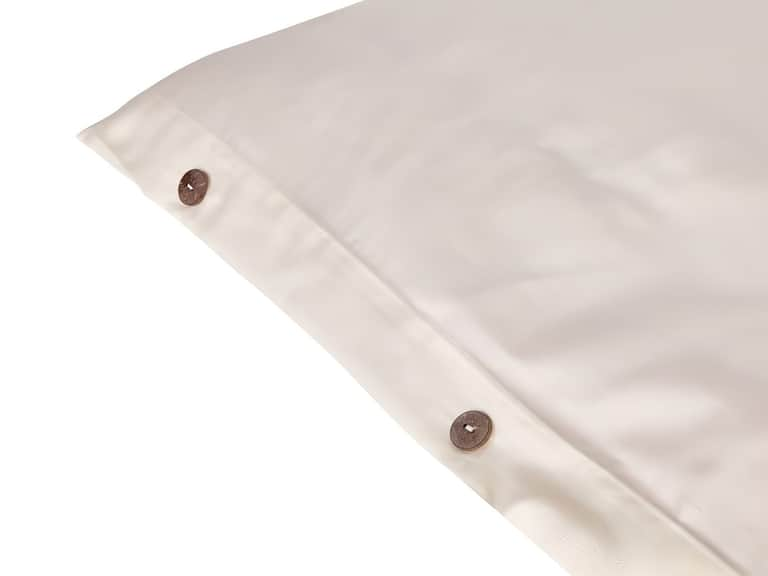
A pillow’s cover is easy to overlook because it is usually hidden beneath a pillowcase. Yet it affects touch, airflow, containment, and upkeep. Cotton percale is made with a plain, balanced weave that typically feels crisp and matte. It can offer a breathable, familiar surface, while the pillowcase adds another layer between the sleeper and the filling.
For the Sleep and Beyond myWool Pillow, the cotton percale cover surrounds the wool fill. A removable pillowcase is still useful: it can be laundered regularly and helps limit direct contact with skin oils and hair products. If a sleeper has allergies or simply wants an additional barrier against dust and everyday debris, a washable pillow protector may be considered, provided it does not make the pillow uncomfortably warm or stiff.
Textile certifications, when present, can help clarify how a product was assessed, but one label should not be treated as a blanket guarantee about every possible health outcome. Read what a certification covers, check the exact model and component, and distinguish a verified standard from broad marketing language. Material transparency and clear care instructions are useful signals; they do not replace individual comfort testing.
Care: preserve the fill, avoid trapped dampness
Care instructions are especially important for wool because aggressive washing or prolonged dampness can affect the fill. The myWool Pillow is described as machine washable, but the product’s current label should guide the process. “Washable” does not necessarily mean that every cycle, detergent, or drying method is appropriate. Follow the manufacturer’s instructions for water temperature, agitation, detergent, and drying rather than assuming all wool products are cared for alike.
Between washes, a few modest habits can help keep a pillow in better condition:
- Use a washable pillowcase and change it regularly.
- Air the pillow in a dry, well-ventilated place when practical.
- Do not put it away while damp; allow it to dry completely after cleaning.
- Use a protector if it suits the sleeper’s comfort and the pillow’s care guidance.
- Inspect the pillow periodically for persistent odor, staining, uneven fill, or loss of support.
Sunlight and fresh air are sometimes suggested as natural ways to refresh bedding. Gentle airing may help disperse ordinary odors, but direct, prolonged sunlight can affect some fabrics and materials. Check the care label first, and do not rely on airing to remove deep stains or substitute for washing when cleaning is needed.
It is also wise to separate everyday airing from claims of disinfection. A pillow placed near an open window may feel fresher, but that does not establish that it has been sterilized or that allergens have been removed. For persistent allergy symptoms or concerns about dust mites, a clinician or allergist can help identify practical steps for the whole sleep environment.
Who may appreciate a wool pillow?
A wool pillow may appeal to people who prefer natural fibers, want a filling with a different feel from down or foam, or are interested in how moisture moves through bedding. The cotton cover and wool fill may also be attractive to anyone trying to reduce reliance on synthetic textiles in the bedroom. But a material preference does not guarantee a particular sleep outcome.
Consider the pillow as a complete object rather than a single ingredient. Ask whether its height suits your usual position, whether its weight and texture feel comfortable, and whether you are willing to follow its cleaning requirements. If possible, review the return policy before purchase; pillow comfort is personal, and written specifications cannot replicate the experience of lying down.
People with wool sensitivity should be cautious, and those with diagnosed allergies should make decisions based on their own medical advice and the precise product materials. “Hypoallergenic” is not a universal promise that no person will react. The cover, fill, laundering routine, and bedroom conditions can all matter.
To explore the specific construction, see the Sleep and Beyond myWool Pillow. Its listed composition—washable wool fill and cotton percale cover—makes it a clear example of the material pairing discussed here. Confirm current specifications and care instructions before purchase, as product details can change.
A pillow is one piece of the sleep environment
Even a thoughtfully chosen pillow cannot carry the whole burden of a comfortable night. Room temperature, ventilation, light exposure, noise, mattress support, bedding weight, and regular routines all shape the setting. If a pillow feels too warm, the cause may be the room or the layers around it rather than the fill alone. A breathable pillowcase, lighter blanket, or modest adjustment to the thermostat may be more useful than replacing every item at once.
That is a practical lesson in natural bedding: focus on how materials behave, but avoid turning any one fiber into a cure-all. Wool’s ability to absorb and release moisture can contribute to a comfortable-feeling sleep surface. Its loft and resilience depend on construction and use. Cotton changes the feel of the cover. Care keeps the materials in service. And the sleeper—not the product description—ultimately determines whether the combination works.
In the end, the case for wool is less about miracle claims than about a particular set of material qualities. It offers a soft, fibrous fill, moisture-handling capacity, and a distinct feel from down or latex. For someone who values those qualities and finds the pillow’s profile comfortable, that may be enough. The best pillow is not the one with the most elaborate promise. It is the one that fits the body, the bedroom, and the realities of everyday care.